



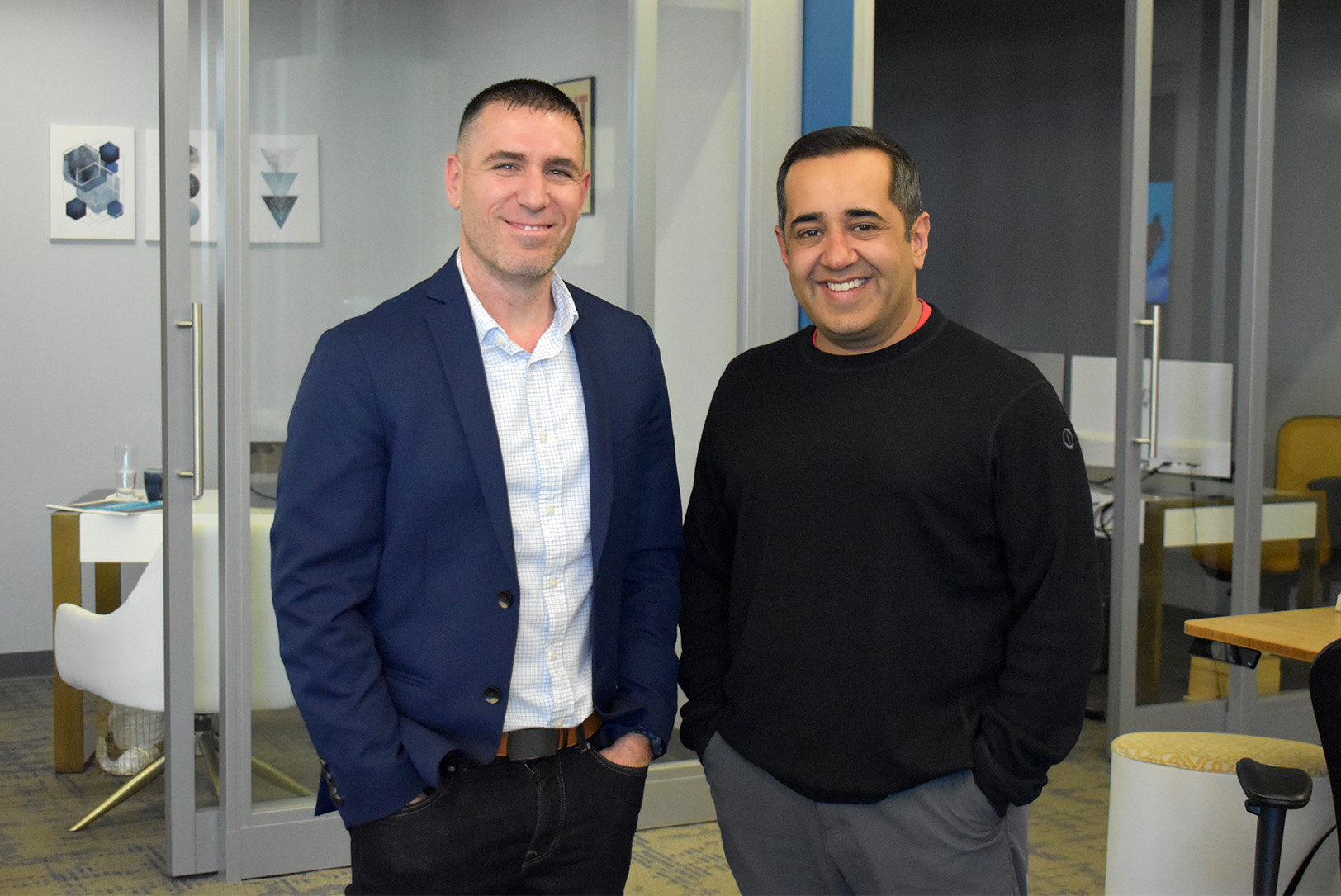
For many companies racing to adopt artificial intelligence, the biggest challenge isn’t the technology; It’s knowing where to begin, said Neal Sharma, whose new venture alongside Craig Sizemore aims to turn AI hype into real business value.
“Everyone knows they need to do something,” said Sharma, executive chairman and co-founder of Kansas City-based STEPS Consulting. “They know they need to get ahead of the wave when it comes to artificial intelligence, but the vast majority of businesses don’t know where to start, what to do next, or how to actually do it.”
 The consultancy firm launched publicly after a development period and has spent the past two years building its client base and refining its approach to enterprise AI adoption.
Rather than selling a single AI software product, STEPS positions itself as a strategic guide for companies trying to make sense of a fast-moving technology landscape.
“We’re helping identify what works for each individual client in a way that aligns with their goals, their objectives and what they want to accomplish,” said Sizemore.
The outcome is usually an individualized strategy rather than a one-size-fits-all product, he explained.
“We help build custom roadmaps that guide their efforts over the course of a year,” Sizemore continued.
Instead of asking companies to dive headfirst into AI, the firm encourages them to slow down, map out their priorities and take their steps forward deliberately.
From digital transformation to the AI era
Both founders bring decades of experience scaling technology businesses.
Sharma previously co-founded and led DEG, a digital agency that grew from a startup into a company with more than 600 employees before being acquired by global holding company Dentsu. During that time, DEG appeared on the Inc. 5000 list nine consecutive years and worked with such brands as Hallmark, Gap Inc. and Nestlé Purina.
Sizemore helped guide much of that growth. During his eight years at DEG, he created the company’s project management office and later oversaw service delivery across the organization.
Prior to STEPS, Sizemore served as COO of Veracity Consulting, where he implemented new workflows and automation strategies that improved profitability and helped the firm earn a spot on the Kansas City Business Journal’s Best Places to Work list.
The founders say their shared history working together is one of the biggest advantages behind the new venture.
“That shared experience helped us build a relationship where we really understand each other’s strengths and weaknesses,” said Sizemore. “And we complement each other very well.”
“I’ve met hundreds of executives and operators, and Craig is a top 1 percent operator,” added Sharma. “He knows how to take care of clients, he knows how to take care of people, and he knows how to deliver results.”
Turning AI pilots into real business value
While many companies have started experimenting with artificial intelligence, Sharma said, experimentation alone doesn’t move the needle.
“For most businesses, success with artificial intelligence begins with the things they’re already doing inside their organizations,” said Sharma. “But eventually you have to align the technology with your actual business goals.”
Without that alignment, organizations risk spending time on small projects that look impressive but create little real value.
“A lot of companies run small pilots with artificial intelligence and then decide it’s not as useful as they expected,” said Sharma. “But that’s usually because they’re building these little projects without first asking: what are the most important activities that run this business, and how could we make them more efficient or more effective?”
That’s where STEPS steps in, helping organizations identify the right starting point before technology ever enters the conversation.
“Where we start with them is defining success,” said Sizemore. “What does success actually look like for their organization?”
The firm begins by working with leadership teams to clarify their strategic goals. From there, it speaks with employees across departments to identify operational friction and bottlenecks.
“Then we can transform those problem statements or opportunities into use cases, and talk about how technology can help solve them,” said Sizemore.
Sometimes those use cases involve custom AI assistants or workflow automations. Other times they focus on eliminating repetitive administrative work that slows teams down.
In short, the goal is to help companies stop experimenting and start producing measurable results.
“What makes STEPS different is that we focus on both enterprise-grade solutions — hardened, scalable systems — and speed to value,” said Sharma.
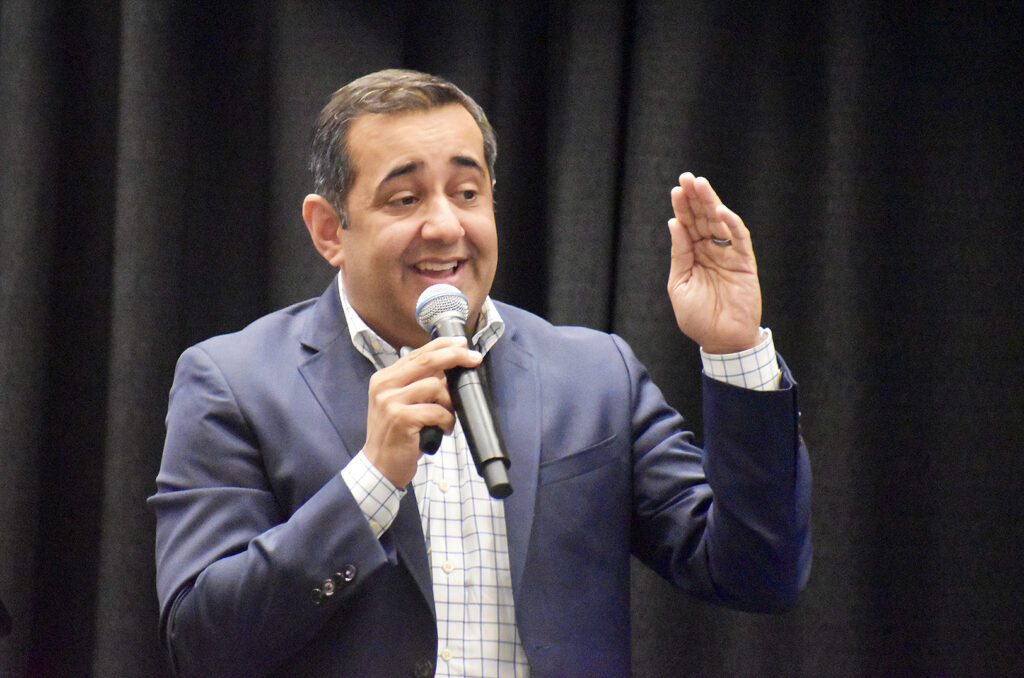
Neal Sharma, co-founder of now-exited DEG and vice president of the Kansas City FIFA World Cup 26 board of directors, delivers keynote remarks during the Gamechangers and Champions 2026 pitch competition; photo by Nikki Overfelt Chifalu, Startland News
Kansas City as a launchpad
Although the consultancy works with clients across the country, the founders intentionally built the company in Kansas City.
“We built our last business in Kansas City,” said Sharma. “Some of the best people we could ever hope to work with are right here.”
The city offers a mix of access, talent and connectivity that the founders say makes it easier to build something ambitious.
“I’ve always thought of Kansas City as kind of the Goldilocks of regions,” said Sharma. “We have the big assets, thinkers and capital sources you need, but you’re also only about one degree of separation from almost anyone in town.”
Nearly half of STEPS’ clients already operate outside the region, a sign that the firm’s reach extends well beyond its hometown.
Still, the company’s operating playbook draws from lessons the founders learned while building their previous venture.
“The best way to scale a business is to repeat the basics consistently and do them really well,” said Sharma. “Deliver value to your clients, make sure you have a clear and differentiated value proposition, and keep your financial health strong.”
And in an era when companies feel pressure to chase every new AI tool that appears, Sharma believes the real advantage still comes from disciplined execution.
“You don’t necessarily have to get overly clever,” said Sharma. “The basic Midwestern principles of running a great business — repeated over and over — are what actually drive scale.”