





Don’t roll credits just yet, said Adam Roberts. The collapse of a deal that would’ve licensed some of Disney’s most popular characters to an AI generator doesn’t mean the end for the fan-inspired, on-demand custom video content that studio executives envisioned (and many cinephiles like Roberts revile).
News broke Tuesday that OpenAI was shuttering its Sora AI video app, which in December inked a three-year licensing agreement with Disney to access curated character content from brands like Marvel, Pixar, Star Wars and the House of Mouse itself.
OpenAI’s statement on Sora:
“We’re saying goodbye to Sora. To everyone who created with Sora, shared it, and built community around it: thank you. What you made with Sora mattered, and we know this news is disappointing.”
Disney quickly confirmed the deal had been nixed, along with its planned $1 billion investment in Sora, according to Variety, which broke the story. (With Sora’s shutdown, ChatGPT also will stop generating video from text prompts, Variety reported, amid ongoing copyright infringement concerns).
RELATED: OpenAI’s Sora was the creepiest app on your phone — now it’s shutting down (Tech Crunch)
It’s too early for skeptics of the technology’s creep into creative sectors like the Hollywood film industry to applaud, said Roberts, owner of Screenland Armour Theatre in North Kansas City.
A sequel to the deal is likely already in the works, he noted — and rallying fans to fight with their wallets against the dilution of beloved intellectual properties could be something of a Hail Mary.
“I don’t have incredible confidence that the studios will not continue to look at applications like Sora to create redundant content based on the IP that they own,” Roberts told Startland News. “If the consumer decides they do not like or want this content, then they will move away from AI.”
RELATED: Screenland Armour brings the ‘magic’ of 70mm film back to Kansas City
While he sees the Sora news as just a short-term win for human creatives and audiences, Roberts is buoyed by the opening weekend success of “Project Hail Mary.” Led by actor Ryan Gosling, the film relied heavily on practical special effects — as opposed to generative AI and advanced CGI — and source material from author Andy Weir to rake in $80 million.
“Project Hail Mary was successful at the theater and has been touted as one of the two non-IP films (even though both are based on books) that broke box office records in their opening weekend,” Roberts said. “I love the novel and think it’s a wonderful adaptation and succeeds on an emotional level because of the commitment to using mostly practical effects with puppets, physical sets, and the like.”
Artistry aside, he acknowledged, the future of filmmaking basically comes down to what sells.
“Hollywood doesn’t change their ways because one film performs well,” Roberts said. “But if we continue to support original films and filmmaking, they will chase those dollars. That’s always the case with Hollywood. Every dollar spent on a movie that’s original or unique is a vote for that type of film or if it fails, shows that maybe people don’t want that. It’s, of course, more nuanced than that, but that’s how the suits learn.”
Disney isn’t the only player
When Disney announced its deal with Sora — and a deeper embrace of artificial intelligence in its film and content production pipelines — the news spread fast both in and out of Hollywood.
In Kansas City — the city where Walt Disney once sharpened his earliest animation ambitions — the conversation carries extra weight.
If the future of film includes generative tools capable of remixing licensed characters, mimicking directorial styles and accelerating production timelines, what happens to the shared experience of cinema? And what becomes of the “magic” Disney has long traded on?
Other players are moving, too — sometimes faster, sometimes quieter.
Lionsgate signed a deal with Runway that allows the AI firm access to Lionsgate’s film/TV library to train a model customized to the studio’s catalog — positioning AI as a tool for creators to “augment” work (and, critics argue, as a step toward deeper automation), according to Variety.
Netflix, meanwhile, is operationalizing generative AI inside production. The company publishes internal guidance on using generative AI in content production — signaling formal guardrails — and reporting also points to real-world uses like VFX and de-aging workflows.
At the same time, studios are drawing hard boundaries around IP.
In February, major studios pressured ByteDance over an AI video tool accused of generating clips that mimic copyrighted characters and scenes, according to The Guardian — a reminder that Hollywood’s embrace of AI is paired with aggressive enforcement when AI outputs threaten ownership and licensing control.
And the issue gets even messier.
The late actor Val Kilmer is set to star in “As Deep as the Grave” — despite having never stepped foot on set before his death from throat cancer in 2025. Citing Kilmer’s passion for the project, the actor’s family allowed the film’s writer and director Coerte Voorhees to use generative AI to create his role in the film, according to another Variety exclusive.
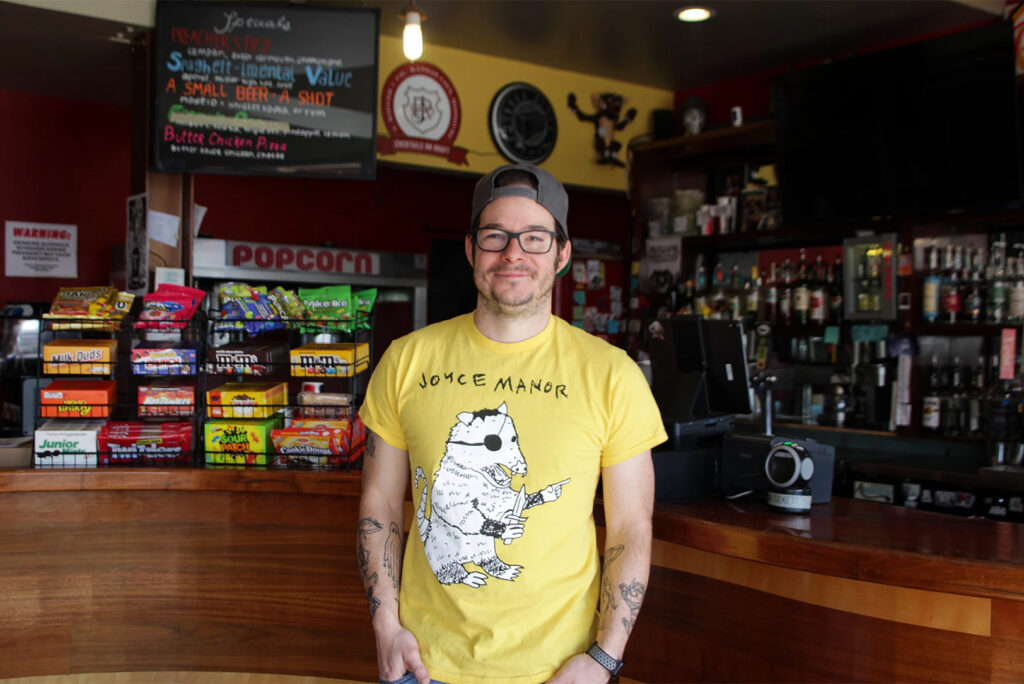
Adam Roberts, owner of Screenland Armour in North Kansas City; photo by Celisa Calacal, KCUR
What’s the point of personalized slop?
Screenland’s Roberts doesn’t dismiss what he sees as a creative threat. But he refuses to panic.
“I think I am still incredibly hopeful,” Roberts told Startland News.
That optimism, however, exists alongside clear-eyed concern. For Roberts, the real danger isn’t just AI-assisted editing or post-production efficiencies. It’s the potential normalization of personalized, algorithm-driven storytelling built from corporate-owned intellectual property.
Studios already dominate through franchise logic — Marvel, Star Wars, Indiana Jones, endless sequels and remakes. Layer generative AI on top of that, Roberts argues, and the slope steepens.
The possibility that viewers could one day prompt customized versions of licensed characters or narrative styles — all inside a streaming app — represents a shift from communal storytelling to individualized content generation.
Cinema, traditionally, has been the opposite.
“The tangibleness, the analog of communal theaters, is never going to go away,” Roberts said.
At Screenland, he’s betting on that premise — investing in 35mm and 70mm projection, leaning into repertory programming, and watching younger audiences rediscover the joy of seeing older films on a big screen.
In recent months, he said, applause has returned at the end of screenings — something he remembers from his own youth but felt had faded.
That detail matters.
Because what AI threatens most isn’t simply jobs or workflows, Roberts said. It threatens the shared cultural moment — the idea that thousands or millions of people encounter the same story at roughly the same time and talk about it together.
The paradox is particularly sharp in Kansas City.
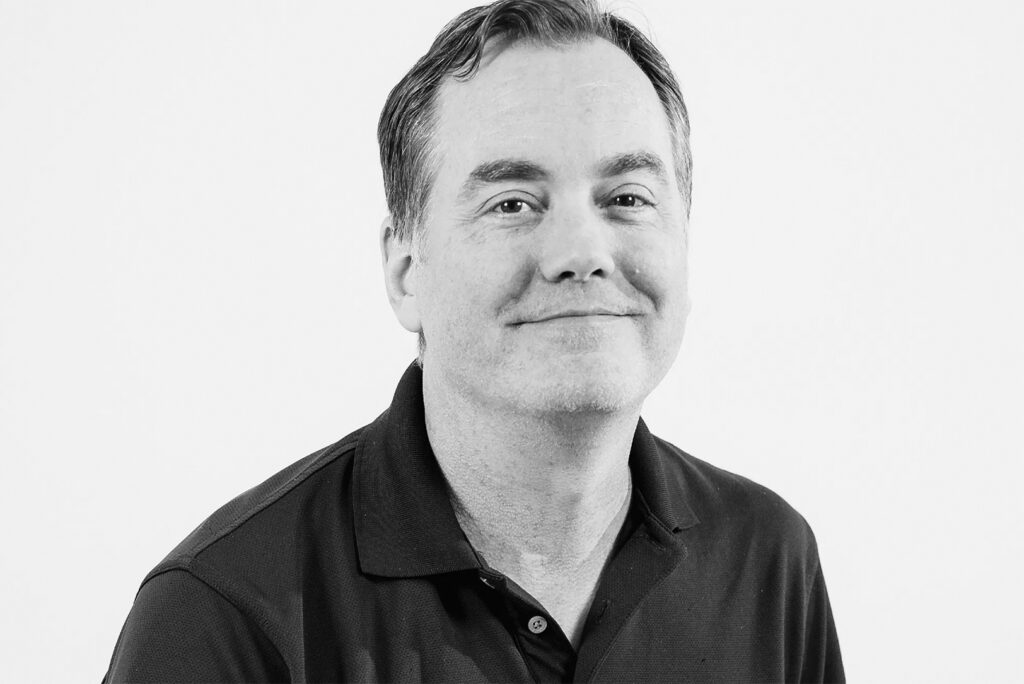
Doug Hudson, Kansas City Art Institute
From hand-drawn beginnings to algorithmic futures
Long before Mickey Mouse became a global brand and before Steamboat Willie transformed animation history in 1928, Walt Disney was experimenting in Kansas City studios, building an ethos around handcrafted storytelling and artistic risk.
Today, the conglomerate formally known as The Walt Disney Company stands as one of the most powerful media entities in the world — a corporation whose intellectual property portfolio is among the most tightly guarded in the industry.
That transformation complicates the narrative.
COMMENTARY: Why OpenAI shut down Sora
Disney’s statement to Variety on Sora deal:
“As the nascent AI field advances rapidly, we respect OpenAI’s decision to exit the video generation business and to shift its priorities elsewhere. We appreciate the constructive collaboration between our teams and what we learned from it, and we will continue to engage with AI platforms to find new ways to meet fans where they are while responsibly embracing new technologies that respect IP and the rights of creators.”
Doug Hudson, professor of animation at the Kansas City Art Institute, views Disney’s AI pivot less as betrayal and more as structural inevitability.
“Disney literally can’t afford not to fully embrace the technology,” Hudson said.
In a hyper-competitive media landscape, where efficiency and shareholder expectations shape decision-making, standing still is not an option.
If Disney hesitates, competitors will not.
But Hudson does not confuse inevitability with artistic vitality.
“They’ll harness and espouse the same foundational rhetoric they always have about ‘embracing, innovating and leading’ with emerging technologies,” he said.
The promise will be that AI makes things better, faster, more magical.
The harder question is whether speed and scale are the same as creativity.
Hudson argues that animation, in particular, has endured repeated predictions of its demise.
“The animation industry has always been threatened with imminent demise since its inception!” he said.
From the arrival of sound to the rise of television, from digital rendering to streaming, each technological disruption has reshaped workflows. Yet the medium survives — often by adapting, often by splintering, he noted.
Training artists for a moving target
In Hudson’s classroom, that history matters more than the latest tool.
Rather than restructuring curriculum around the demands of any single industry trend, he believes the goal is to ground students in fundamentals — technique, history, ethics — so they can navigate whatever tools emerge next.
AI, in that context, is neither apocalypse nor salvation. It is a tool.
The problem arises when it becomes the primary driver rather than an instrument.
Viewers, Hudson said, ultimately crave “human made, innovative and aesthetically exciting and challenging films made by individuals and groups of artists that are passionate about the medium and their subjects.”
That appetite may not always align with corporate strategy.
Cinema and the magic AI can’t replicate
Roberts sees similar tension playing out on the exhibition side. While streaming continues to dominate at-home viewing, independent theaters have found renewed energy in curated experiences.
Gen Z audiences — often caricatured as screen-bound — are showing up for repertory screenings and analog formats. Vinyl records have resurged. Film photography has rebounded. Kodak has reopened development infrastructure.
None of that signals a wholesale rejection of digital life. It suggests instead a countercurrent — a desire for tactile, shared, intentional experiences.
Cinema has endured because it evolves. But evolution, as Hudson noted, does not always happen at the top of the corporate ladder.
“Don’t look to the giants for those,” he said of innovative films. “Look in their shadows instead.”
Tommy Felts, editor in chief for Startland News, contributed to this report.
Haines Eason is the owner of startup content marketing agency Freelance Kansas. Previously he worked as a managing editor for a corporate content marketing team and as a communications professional at KU. His work has appeared in publications like The Guardian, Eater and KANSAS! Magazine among others. Learn about him and Freelance Kansas on LinkedIn.