


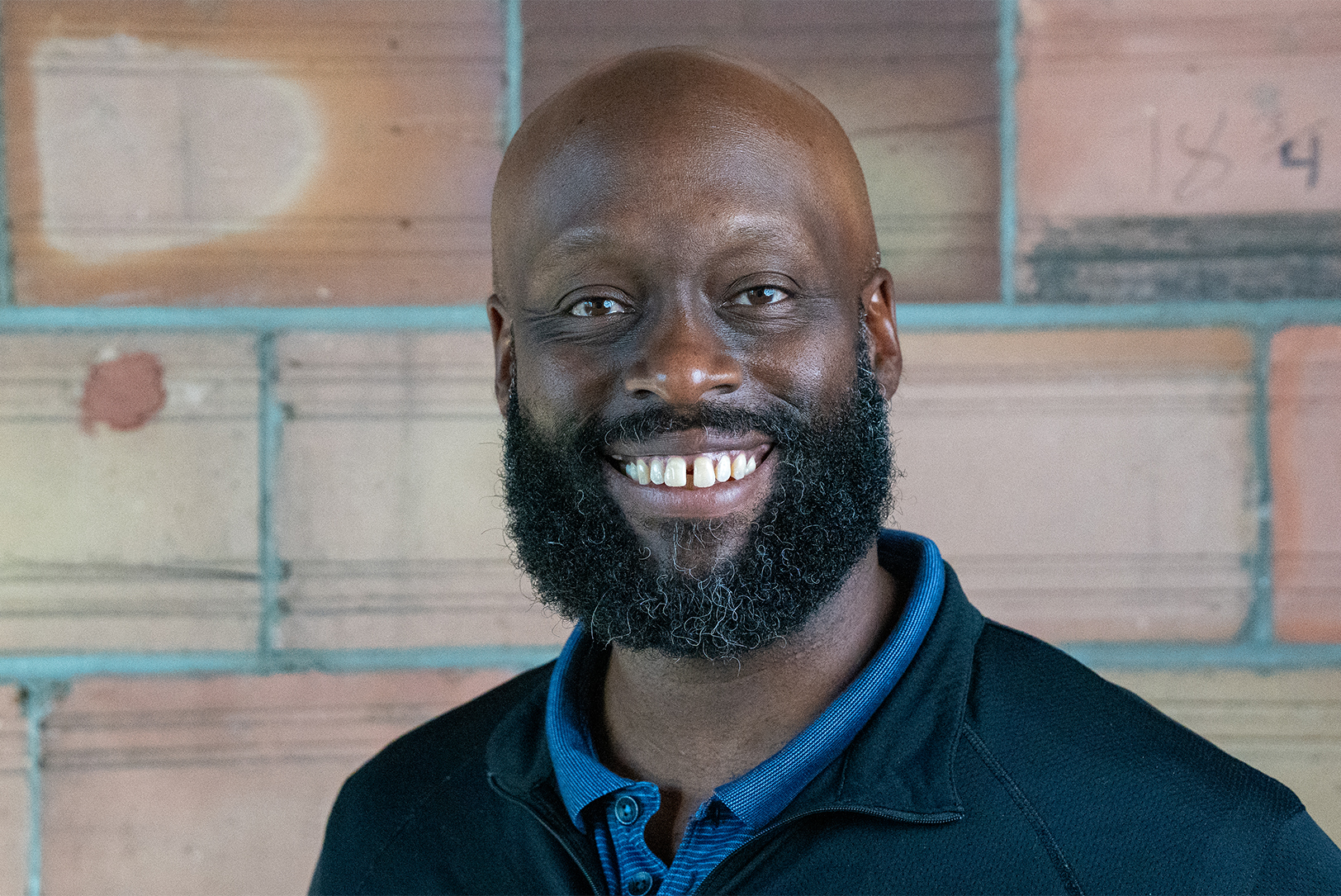
Worker safety within high-traffic roadway construction zones is stalled in the 1970s, said founder Zikomo Fields, driving the vision for a 21st century approach that uses tech to hit the brakes on fatalities.

“There’s not a lot of software that is ensuring that these work zones are set up correctly,” said Fields, CEO of Kansas City-based ViaSight.ai. “Instead, it’s clipboards, pen-and-paper sort of stuff.”
“That exposes a huge gap — especially given that since 2010, fatalities in work zones have increased 50 percent and the cumulative cost of accidents and work zones in the U.S. is estimated to be about $30 billion,” he added.
Launched in late 2025, ViaSight’s first product — ZoneSure — helps transportation agencies make road construction safer by transforming any smartphone into a work-zone compliance tool, said Fields, a member of the fall 2025 cohort of the Nebraska-based NMotion accelerator.
“The idea is you can just use your ordinary smartphone,” he continued, describing a set of features that aligns with requirements of the Manual on Uniform Traffic Control Devices (MUTCD), a set of federal guidelines for work zone and road construction setups.
“Mount it to your windshield, drive through your work zone, and our AI and machine learning algorithms are able to detect any potential safety issues or non compliance with the MUTCD,” Fields explained.
If there’s a lane closure on a major freeway, for example, specific guidelines dictate how to structure the zone for maximum safety.
“We can virtually identify any issues like the spacing on the cones, any missing signs,” Fields said. “A lot of times, these cones get destroyed pretty quickly. People run into them. Or here in KC, we get a big thunderstorm, and the next thing you know, you’ve lost them.”
Getting in the zone
When Fields and co-founder Mayura Gunarathne started ViaSight in early 2025, they were originally focused on how well newer vehicles with lane-keeping assist systems and autonomous vehicles navigate work zones — earning them a contract with the Minnesota Department of Transportation, where half of the startup’s team is based. The results will be published later this month.
“When the world found out that we were studying the safety of autonomous vehicles in work zones, people started becoming really interested,” he continued, noting appetite from major Kansas City firms that also validates the need for their research and tech.
So why the pivot?
“The Federal Highway Administration in late 2024 put out a mandate that all departments of transportation must start using data-driven processes to ensure the safety of their work zones and to make sure that they’re compliant with the MUTCD,” Fields said.
That led to the development of ZoneSure.
“We were pulled there,” he noted.
The startup has already launched a pilot with a global toll road operator in Portugal, Fields said, and the co-founders will soon be attending a trade show for the American Traffic Safety Services Association, where they are hoping to land a couple more pilots.
“We’re also in discussions with a Fortune 100 company on another transportation platform,” he added.
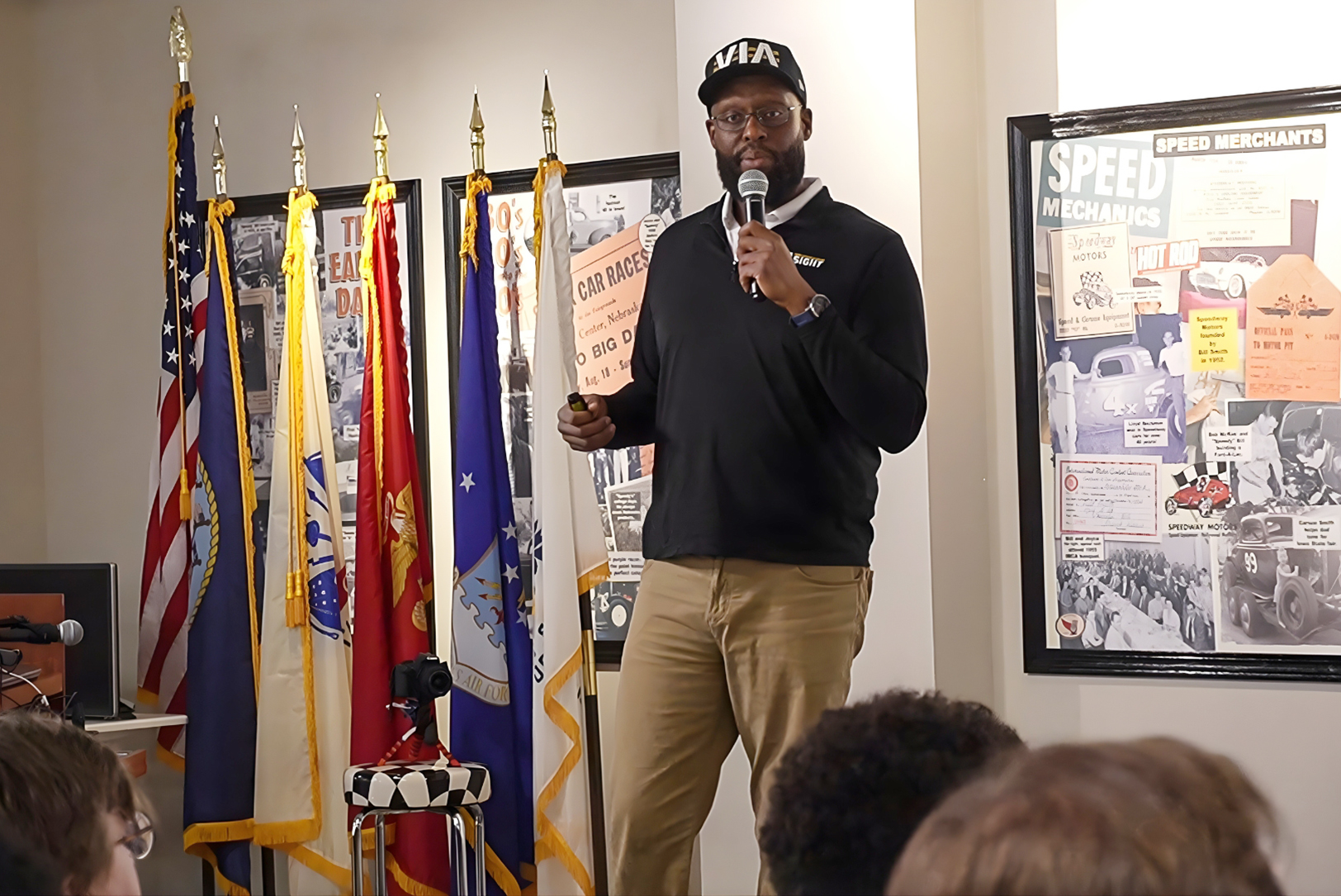
Zikomo Fields, co-founder of ViaSight, pitches his startup during a Feb. 12 NMotion accelerator cohort; photo by Spencer Goracke
Feeling the startup rush
Fields got the “entrepreneurial bug” while working for now-exited EyeVerify (acquired by Alibaba) and founder Toby Rush, starting in 2015, he shared.
“That was an amazing experience,” Fields explained. “I had never really left the country before and the next thing I knew, I was spending months and months and months in China. That was quite the wild ride. I was like, ‘OK, well, that was an incredible experience, so I’d love to do something like that on my own.”
Working at EyeVerify as a software engineer opened his eyes to the dynamic of a startup, Fields continued.
“This is not like working at a regular company,” he noted. “There’s nothing wrong with doing that, but the stakes are just a lot different when you’re a much smaller team. I think I was probably employee No. 12 or 13 at EyeVerify. So I was pretty early on, and I had a much bigger impact on the long term project.”
“It was just really exciting to be part of something like that and just be on the inside for the whole process and watching Toby operate,” he added. “He’s a fantastic founder.”
Now as a founder himself, Fields calls himself a reluctant CEO who would rather be coding. But being a part of the NMotion accelerator has helped him step more confidently in the leadership role, he said.
“We’re learning that part of the business,” Fields explained, “how to build a sales cycle, all the things that we need to have to do to prepare for investment, and building our pitch decks. One thing that (Scott Henderson, general partner at NMotion) is really, really, really great at is getting us to set goals and to actually go out there and make it happen.”