First he built the data infrastructure, then a $2B valuation: It’s new territory for AI in construction
February 19, 2026 | Taylor Wilmore

Luke Hansen, CompanyCam
LINCOLN, Neb. — When his Midwest startup launched, founder Luke Hansen had modest expectations for success, he said. Hansen was focused on building a sustainable business, not a billion-dollar company.
“The immediate goal was like, ‘Can we make enough that we’re just not losing money every month, paying ourselves pretty low salaries?’” said Hansen, CEO of CompanyCam.
About a decade later, that payroll worry is less of a concern with the Lincoln-based construction documentation and project management platform hitting its $2-billion valuation. It’s a milestone Hansen said makes CompanyCam the first Nebraska startup to surpass the $1 billion unicorn mark and signals continued momentum in the state’s technology sector.
The company’s growth also highlights a broader shift in construction, he noted. Applied artificial intelligence and industry-specific software are gaining traction in a field that has historically been slower than others to adopt digital tools.
RELATED: Here’s how CompanyCam earned its $2B valuation
Built from a roofer’s real problem
CompanyCam grew out of Hansen’s experience in his family’s roofing business, where he saw a consistent problem with jobsite documentation.

Contractors regularly took photos of their work but struggled to store and retrieve them in an organized way. Images were scattered across personal phones, text threads and general cloud storage platforms.
“The core problem was that we need this information, and we don’t have it,” said Hansen. “Can we make it easy to just get all these photos in and get them organized so that we can actually find them?”
Some contractors tried using tools like Dropbox or Google Drive. Others texted photos to themselves. Those options did not solve the need for structured documentation connected to specific jobs.
Hansen built a tool that automatically organized jobsite photos by location, project and timeline. The platform was designed for workers in the field, with simple workflows suited for active jobsites.
“I couldn’t believe no one was doing it really,” Hansen said. “I was like, no, ‘I’m pretty sure we need this.’”
Over time, the product expanded beyond photo storage.
Each project created a digital record that contractors could use in disputes, insurance claims and internal communication. As adoption grew, so did the volume of real-world construction data captured on the platform.
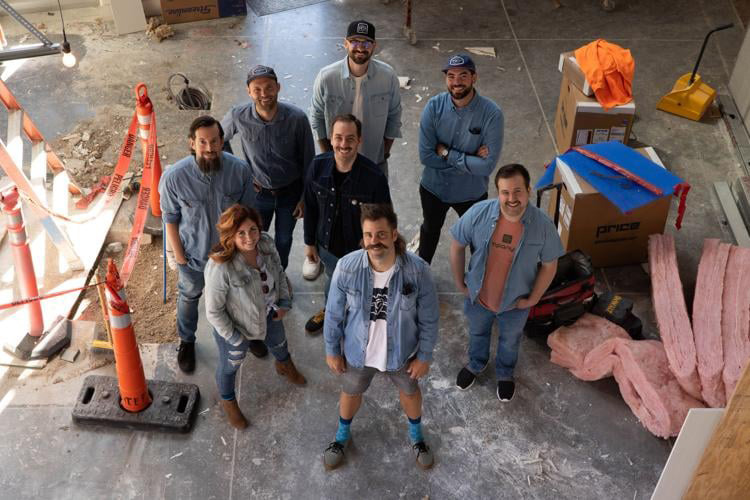
An undated CompanyCam team photo; courtesy photo
Growing one contractor at a time
CompanyCam’s growth was steady rather than explosive, Hansen explained. Early on, he relied on persistent outreach and relationship-building in an industry where trust matters.
Some contractors were skeptical about new technology. Others questioned how their data would be handled.
“Selling it, getting your 100th customer is so much easier than getting your first customer,” said Hansen. “And getting your 1,000th customer is actually easier than getting your 100th customer.”
As the customer base expanded, referrals became a primary driver of growth. Contractors who found value in the platform shared it with peers and crews. Much of the company’s momentum came from that word-of-mouth dynamic.
“People love to talk about things that they like and that make them sound smart,” said Hansen. “If you could give someone something that makes their job easier, they’ll tell people about it.”
Today, contractors across the country use CompanyCam to document work, maintain project records and verify details in disputes. The platform also helps streamline communication between field teams and office staff.
AI takes on the busywork
As digital tools become more common in construction, CompanyCam has added artificial intelligence features to reduce administrative work.
Construction companies often spend significant time writing reports, organizing documentation and compiling project records. AI tools within the platform are designed to automate parts of that process.
“I see things that surprise me every day. Almost anyone now has the ability to accomplish so much more than they could before,” said Hansen.
The goal is to remove as many menial tasks as possible.
“How do we take everything away from the customer that isn’t just their core work? There’s like a million things related to that,” said Hansen.
He pointed to the example of a home inspector who used automation tools to speed up report preparation and give her more of her life back.
“She was saying it was the first Memorial Day in like a decade that she wasn’t writing inspection reports,” Hansen recalled.

A CompanyCam showcases the startup’s roots in Lincoln, Nebraska; courtesy photo
A unicorn milestone in Lincoln
Reaching a $2 billion valuation places CompanyCam among a relatively small group of privately held startups nationwide. In Nebraska, it marks a first for the state’s startup ecosystem.
“When people pay you money for something, it’s proof that they value it,” said Hansen. “It’s proof that we are doing something that a lot of these contractors actually value, and that is helping them in their business.”
CompanyCam offers equity participation to employees, giving team members a stake in the company’s financial success.
“When things like this happen, almost everyone personally benefits financially,” said Hansen. “I see new cars showing up in the parking garage, and I’m like, ‘Oh, that’s fun.’”
Despite the headline valuation, Hansen said, the company’s identity is rooted in its people and customers, not in financial metrics.
“Businesses aren’t real. There’s people. Your business is the people that you have working inside it,” said Hansen.
While reaching unicorn status is a major milestone, CompanyCam continues to invest in product development and expanded AI capabilities, he noted. Its long-term direction remains guided by customer needs.
“What we can control is, ‘Are we creating value for our customers?’ If we keep doing that, then we are not going to lose,” said Hansen.
Fund More Stories
This story was made possible by readers like you. Join them — make a one-time contribution or become a monthly member to sustain our work.









Related Posts