


Editor’s note: This story was originally published by Missouri Business Alert, a member of the Kansas City Media Collective, which also includes Startland News, KCUR 89.3, American Public Square, Kansas City PBS/Flatland, and The Kansas City Beacon.
Click here to read the original story.
When a small Colombian family opened Delysium Artisan Bakery in Columbia, they carried dreams of a new life, a new opportunity — and recipes that trace their roots back to the mountains of South America.
But behind the aroma of fresh-baked bread lies a difficult financial reality shared by many new entrepreneurs: Starting a business in Missouri is an uphill battle, and, for immigrant business owners, the path is even steeper.
National studies estimate that across the United States, nearly half of all new businesses shut down within five years. Bureau of Labor Statistics data show that just more than one-third of private-sector establishments founded in 2013 were still operating 10 years later.
Missouri businesses face even tougher odds. According to a 2025 analysis, 43 percent of businesses in Missouri survive their first five years, placing the state among the lowest in the country for business survival rates.
This statistical backdrop sets the stakes for the Colombian-owned bakery that opened in 2024 near the University of Missouri campus.
The price of building a dream
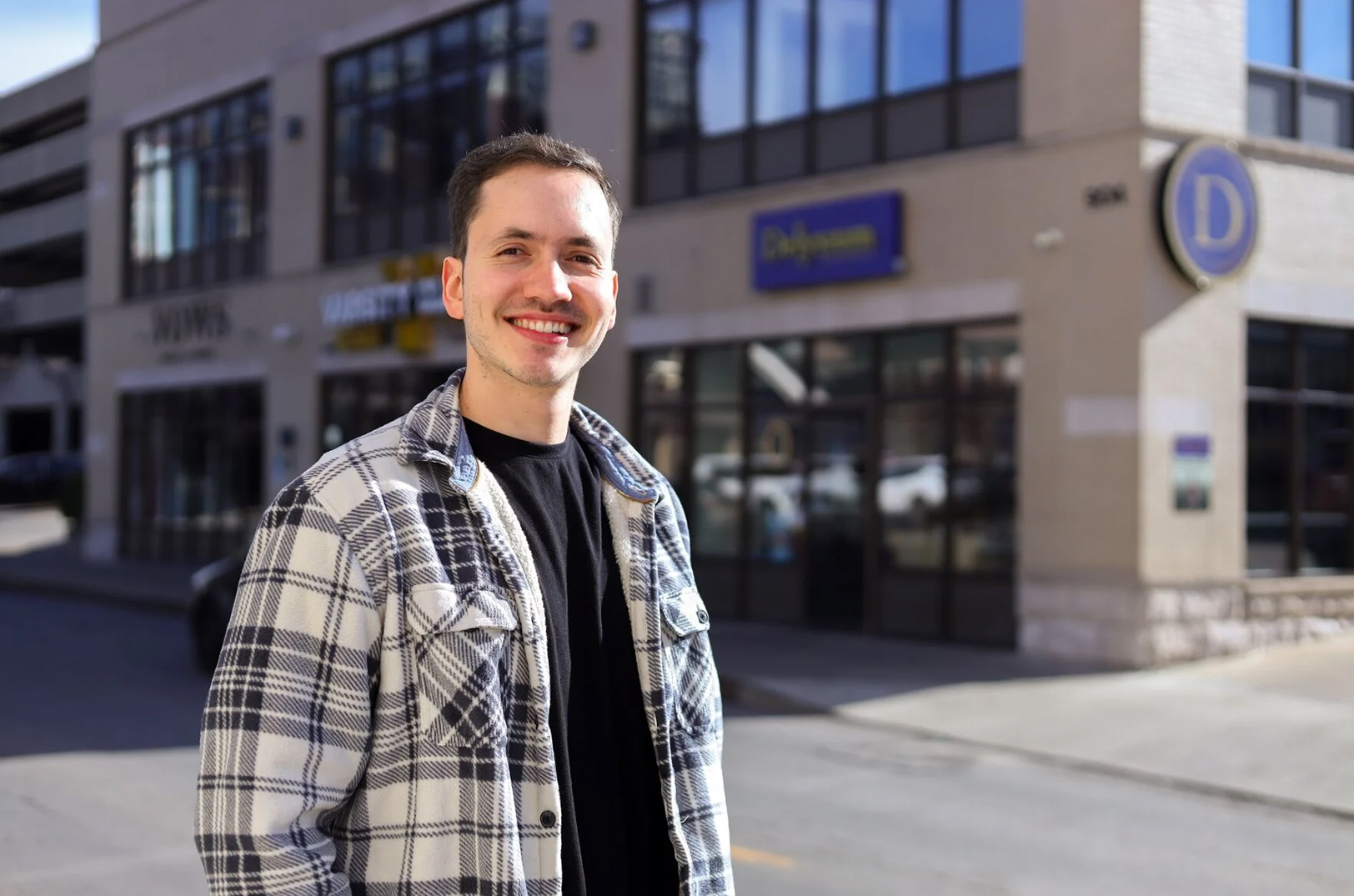
Pablo Giraldo, one of the co-owners of the bakery and a doctoral student at MU, said his family needed to show a major investment to qualify for an E-2 investor visa, which allows foreign entrepreneurs to live in the U.S. while operating the business they have invested in.
Between legal fees, equipment purchases, bakery renovations, rent, supplies and initial payroll, Giraldo estimates they invested around $150,000 before selling their first pastry.
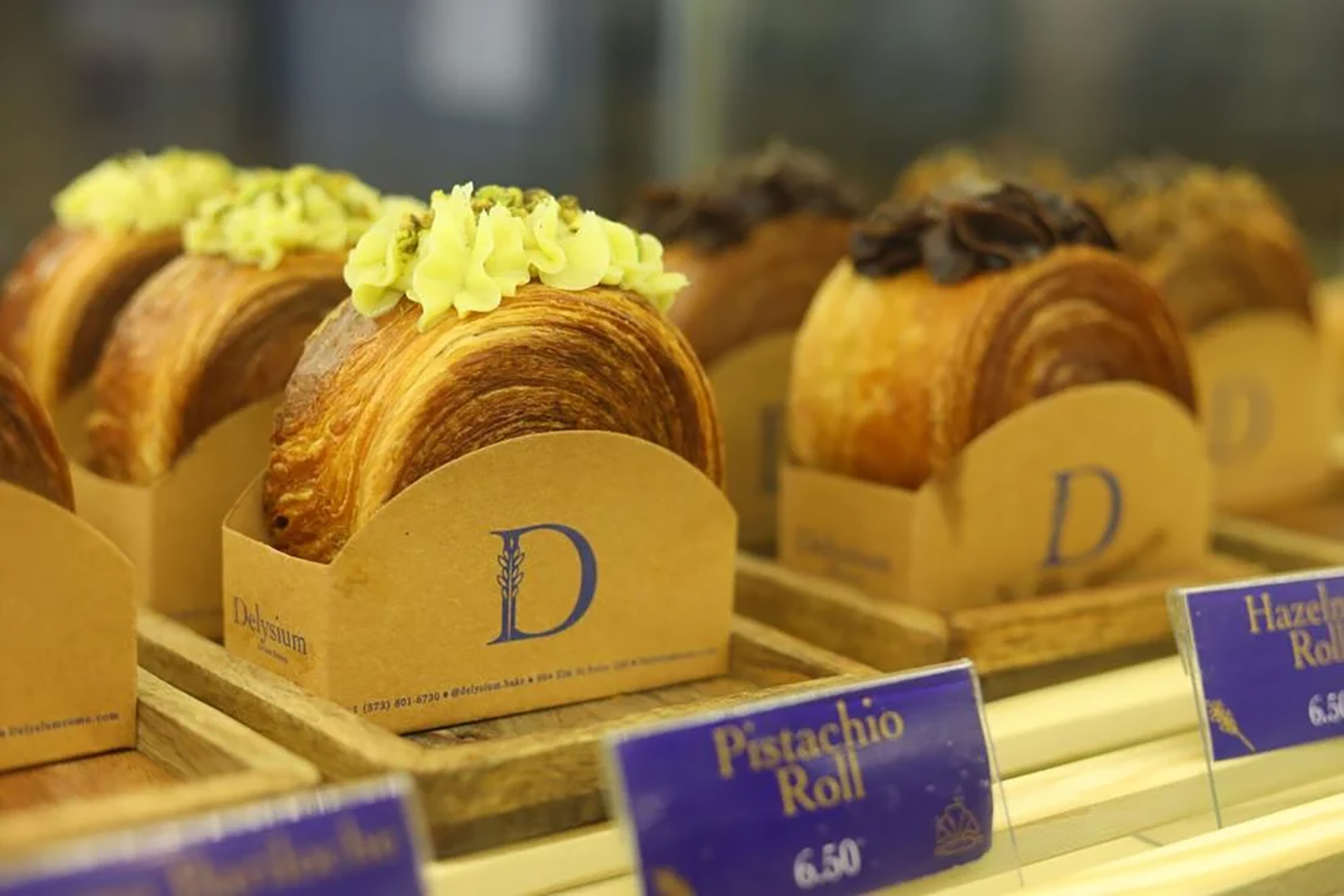
Pistachio and hazelnut rolls are some of the most popular pastries at the bakery. The rolls are Delysium Artisan Bakery’s take on a New York-style roll; photo by Elizaveta Orlova, Missouri Business Alert
“We were told that we needed to invest first and then apply for the visa, before opening,” Giraldo said. “So we had to take a risk — without knowing for sure if everything would work out.”
When the bakery opened in August 2024, sales came slowly. “In January we made around $10,000, but our expenses were twice that,” Giraldo said. He estimates that in the first year the business accumulated about $80,000 in losses.
One unexpected challenge was staffing. At the beginning, Delyisum hired several employees — mostly students.
Because baking is such a labor-intensive role, many applicants seek more than $20 per hour — a level that can be difficult for a small business. “We couldn’t sustain that at the beginning,” Giraldo said
Now, the Giraldos have taken on most of the work themselves, which has helped stabilize costs. They have learned to price their products more appropriately, recognizing that an artisan, handmade pastry made with natural ingredients cannot be sold at the price of a mass-produced supermarket pastry.
“It’s been a learning process,” Giraldo said. “We are doing better now. We’re still not comfortable, but we’re not in danger.”
What keeps customers coming back
Despite the obstacles, customers say the bakery has brought something new to Columbia.
“I love trying new things,” MU student Jordan Henderson said. “It’s exciting to have a Colombian bakery here. It feels more interesting than the usual chains.”
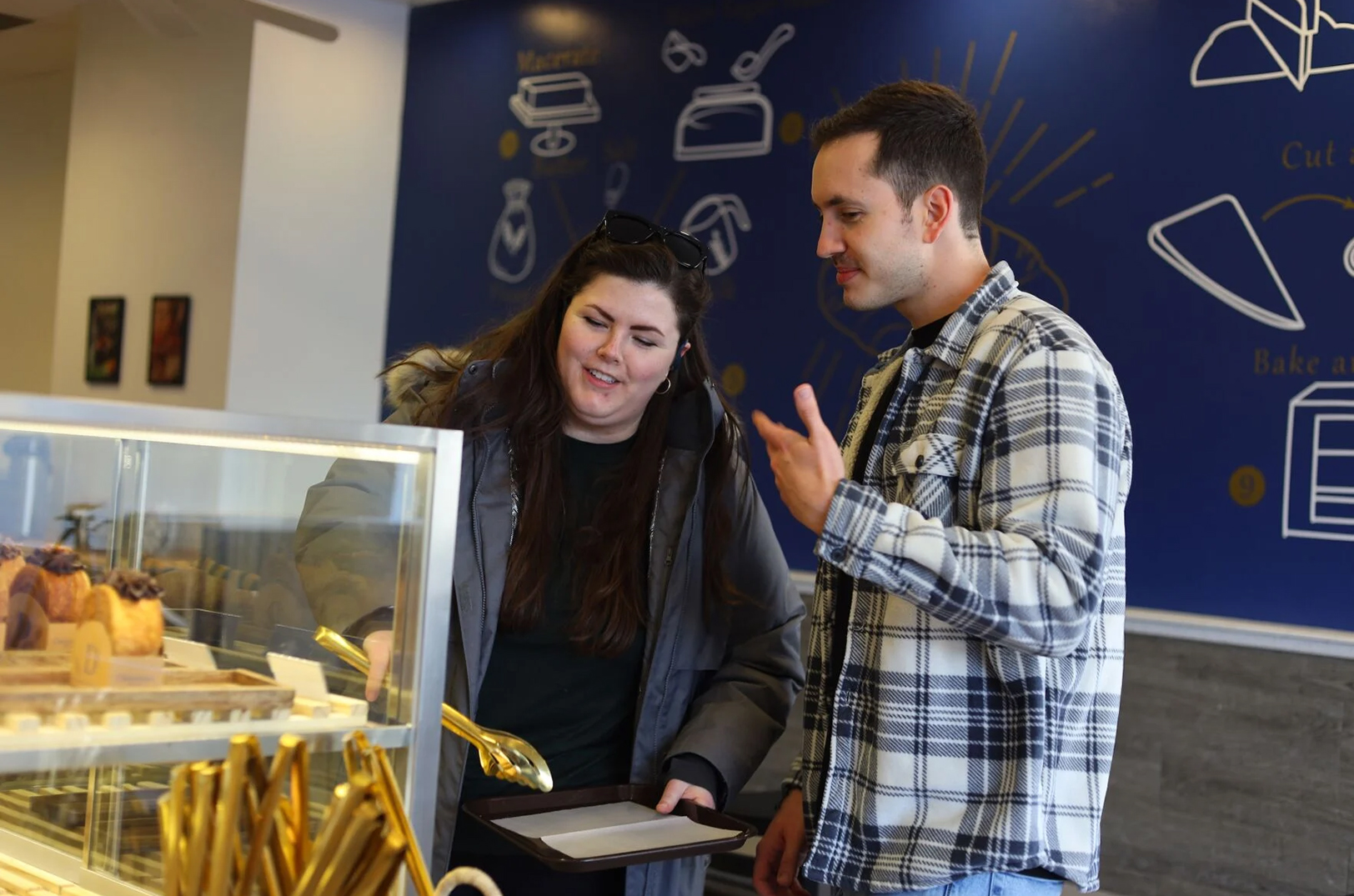
Pablo Giraldo introduces first-time customer Rachel Volmert to the bakery. The bakery’s menu includes croissants, a wide variety of pastries, sandwiches and cake; photo by Elizaveta Orlova, Missouri Business Alert
Another regular customer, Donna Miller, an employee at Columbia’s Convention & Visitors Bureau, praised the bakery’s vision.
“It’s all made from scratch every day,” she said. “The quality is exceptional, and I enjoy spending my money at a small, family-owned place. There’s not many pastry places downtown, and this bakery isn’t Starbucks. It has serenity and soul.”
Columbia is welcoming — but not easy
Columbia’s Regional Economic Development Inc., an organization that supports local entrepreneurs, works closely with small business owners like Giraldo.
“Hospitality and food-service businesses are among those that face the highest failure rates in comparison to other industries,” Lisa Driskel Hawxby, business development specialist at REDI, said. “In Columbia, you must be realistic about your financial plan and fully understand the costs before committing to a physical location.”
Lesley Sapp, global entrepreneurship specialist at REDI, said the challenges multiply for newcomers.
“Starting a business is hard for anyone,” she said. “But add immigration, unfamiliar regulations, limited English proficiency — and the difficulty increases significantly.”
She said REDI provides mentoring and support to help reduce those risks. Still, the survival of any business depends on adaptability and community support.
A community of new entrepreneurs, shared struggles
Starting a business often means navigating months of uncertainty, uneven cash flow and steep learning curves — realities that many Columbia entrepreneurs recognize firsthand.
Christina Hartman, founder of Banshee Cybersecurity, said that even with 20 years of information technology experience, the first half-year of entrepreneurship was a financial cliff.
“Those first six months, I was a little nervous,” Hartman said. “I was doing all this marketing and networking, but I still didn’t have clients.”
She self-funded her launch — about $30,000 invested into branding, marketing, and accounting — and ended her first year at a loss. But she stayed patient and says that persistence paid off.
“Everyone told me the three-to-five year mark is when you finally know it’s working,” Hartman said. “I’m looking forward to that third year.”
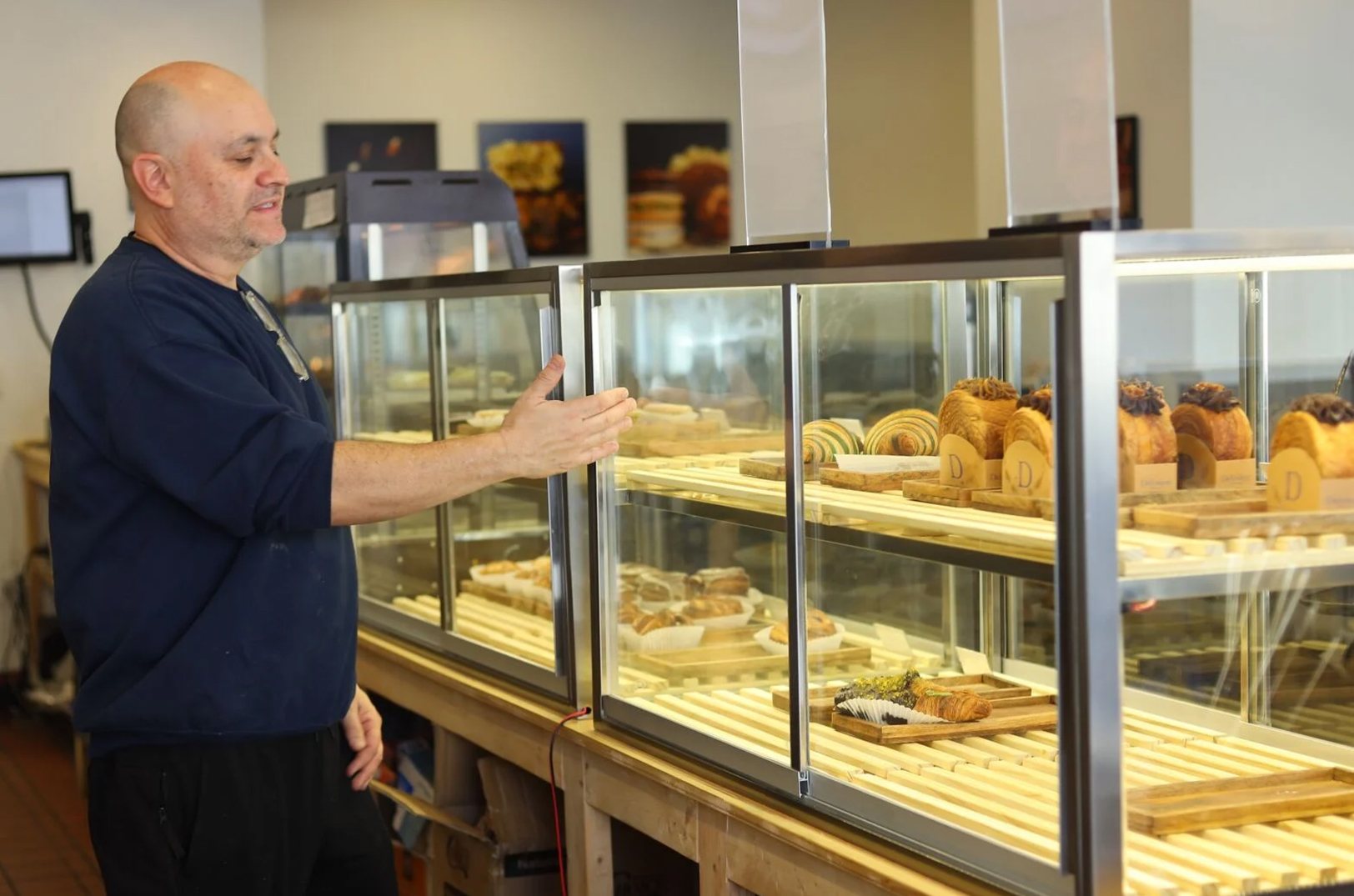
Carlos Giraldo explains what type of pastries Delysium Artisan Bakery has in store for the day; photo by Elizaveta Orlova, Missouri Business Alert
Meanwhile, Joe Barraco, co-founder of ThankAfter, a service that helps people send handwritten gratitude notes after major life events, said launching a startup is deceptively easy.
“It’s easy to build a website,” he said. ”The hard part is getting someone to pay for your idea.”
His biggest lesson: Sell first, build later. Barraco says he has invested under $20,000 and expects to reach profitability within months — but he regrets not connecting with Columbia’s entrepreneurial community sooner.
“If you want to go far, you go together,” he said. “I avoided networking for too long.”
Both entrepreneurs said Columbia’s ecosystem — from REDI to networking groups and a legal clinic for entrepreneurs — gives new founders a chance to grow. But personal resilience still determines success.
Making connections, not just pastries
While business survival rates paint a stark picture, Giraldo’s determination reflects a different kind of truth: Survival is not just a number. It’s choices, sacrifices, long nights and a belief that tomorrow could be better.
The bakery has gained a loyal customer base, and Giraldo says revenue has increased by about 50% since those slow early months. The goal is to reach consistent profitability within the next year.
“I hope that in a few years we can say that this was worth all the stress,” he said. “We want to give Columbia something unique.”
For Giraldo, that “something” is more than food. It’s the taste of home for some, a discovery for others and a reminder that the American economy — and identity — is shaped every day by immigrant families who work relentlessly to belong.
In a state where more than half of new businesses don’t make it to year five, simply staying open may be achievement enough. But for Giraldo and his family, success means more than beating the statistics. It means building a future — one pastry at a time.