



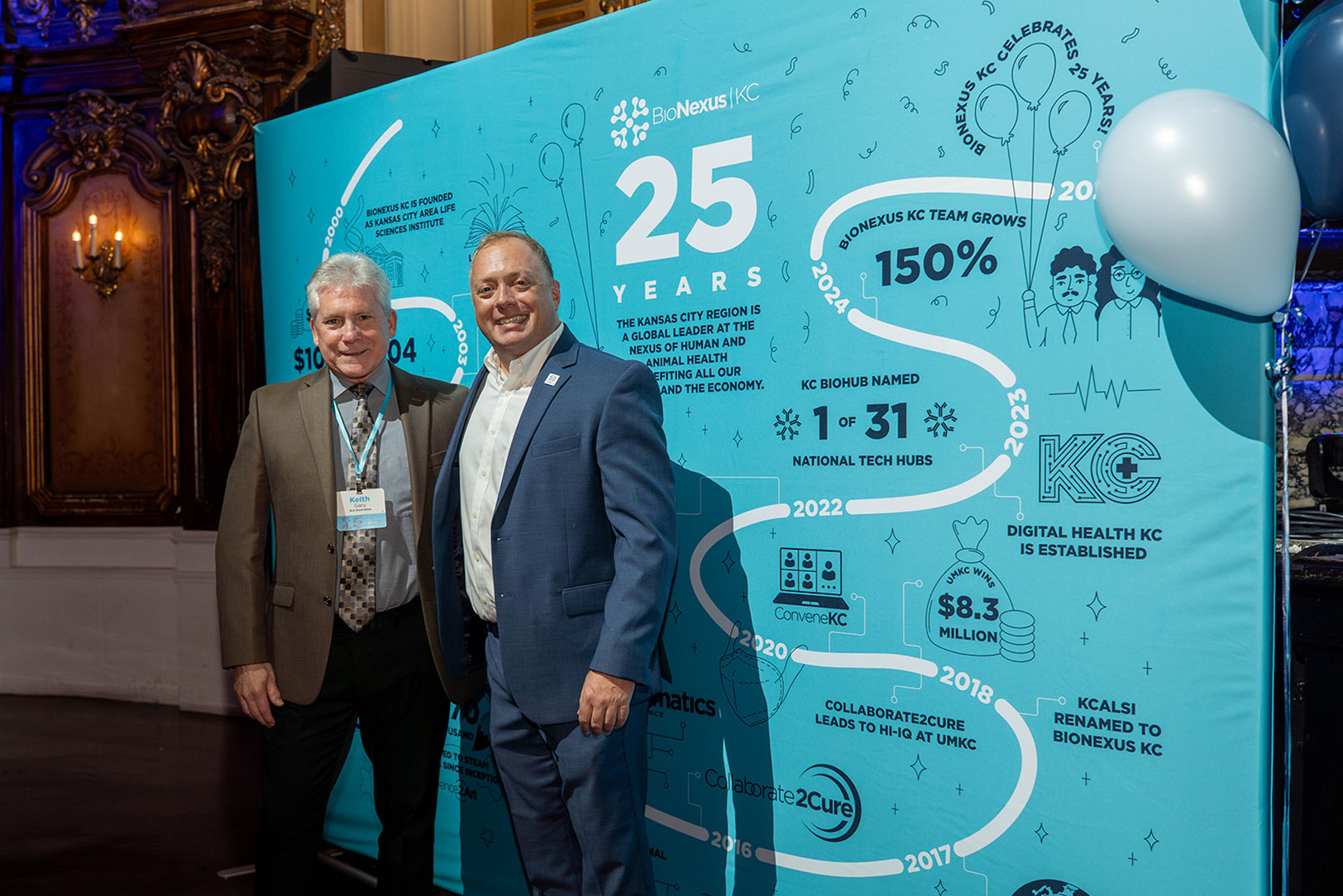
A quarter-century commitment to regional investment and collaboration is paying off, said Dennis Ridenour, reflecting on a timeline of impact for BioNexus KC — accelerating innovation and strengthening health outcomes in Kansas City and beyond.

“This milestone is not about a single achievement; it’s about decades of collective, focused effort that have allowed our ecosystem to grow and thrive,” said Ridenour, president and CEO of BioNexus KC, marking the organization’s 25th anniversary. “Collaboration has been our foundation, and by working together across the region, we will continue to generate meaningful economic and social impact for the entire community.”
Since its founding in 2000, BioNexus KC has served as a trusted convener and catalyst for the region’s thriving ecosystem of researchers, clinicians, entrepreneurs, and industry partners, he explained, noting Kansas City is now home to a vibrant network of leaders committed to advancing critical areas such as life sciences research, rare diseases, human and animal health innovation, and informatics.
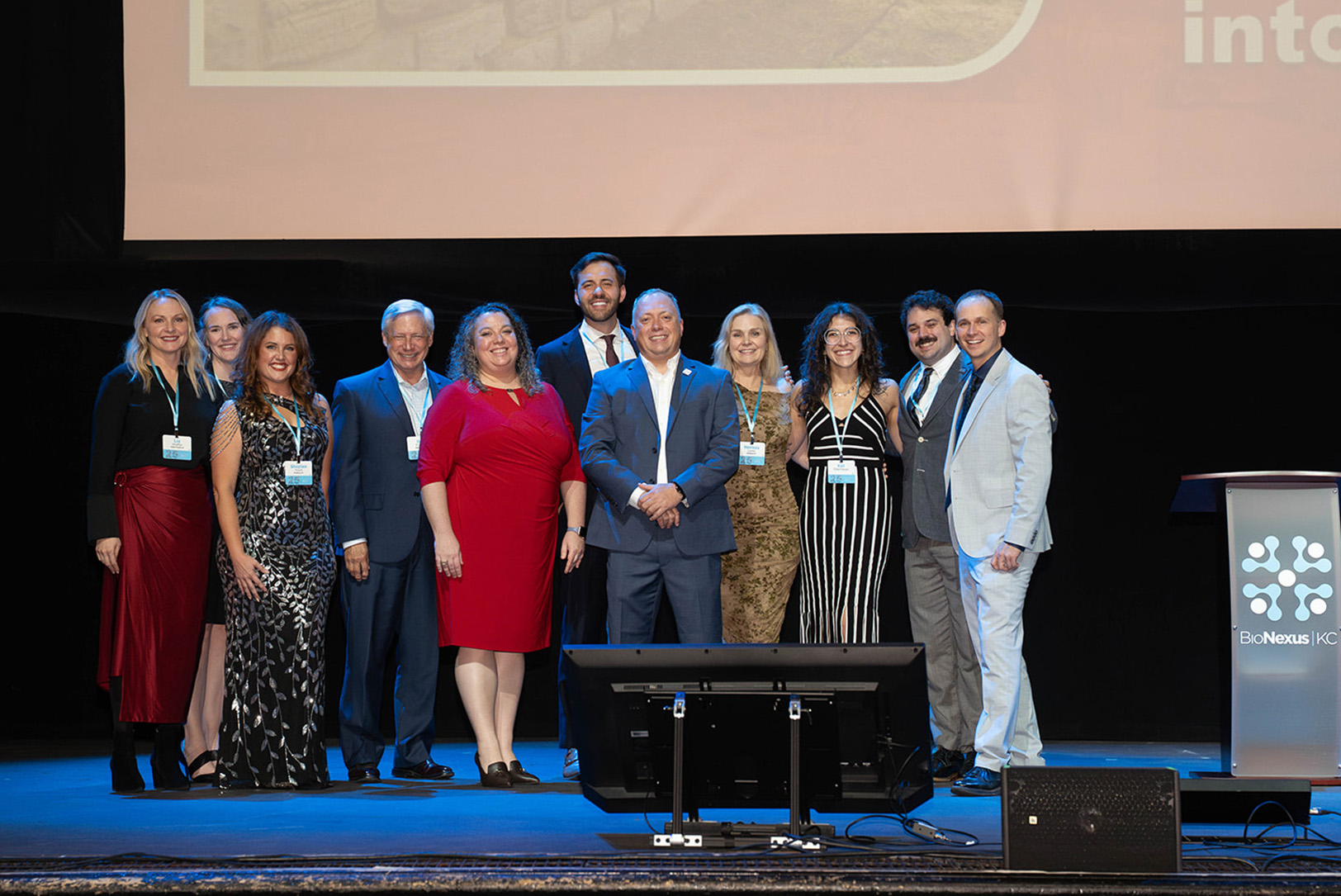
Members of the BioNexus KC team stand on stage at the Midland Theater in November during a 25th anniversary event honoring BioNexus KC; photo courtesy of BioNexus KC
The Kansas City region is recognized globally for its unique strengths in human and animal health, and BioNexus KC plays a central role in sustaining this momentum by promoting scientific advancement and expanding the reach and impact of the region’s research ecosystem — most recently through initiatives like KC BioHub.
“Kansas City is lucky to have a long-standing backbone organization for the life sciences in place,” said Melissa Roberts Chapman, president and regional innovation officer for KC BioHub. “This ‘operating system’ has helped our community build the infrastructure and sustained commitment that is necessary to grow the life sciences ecosystem in the long-term.”
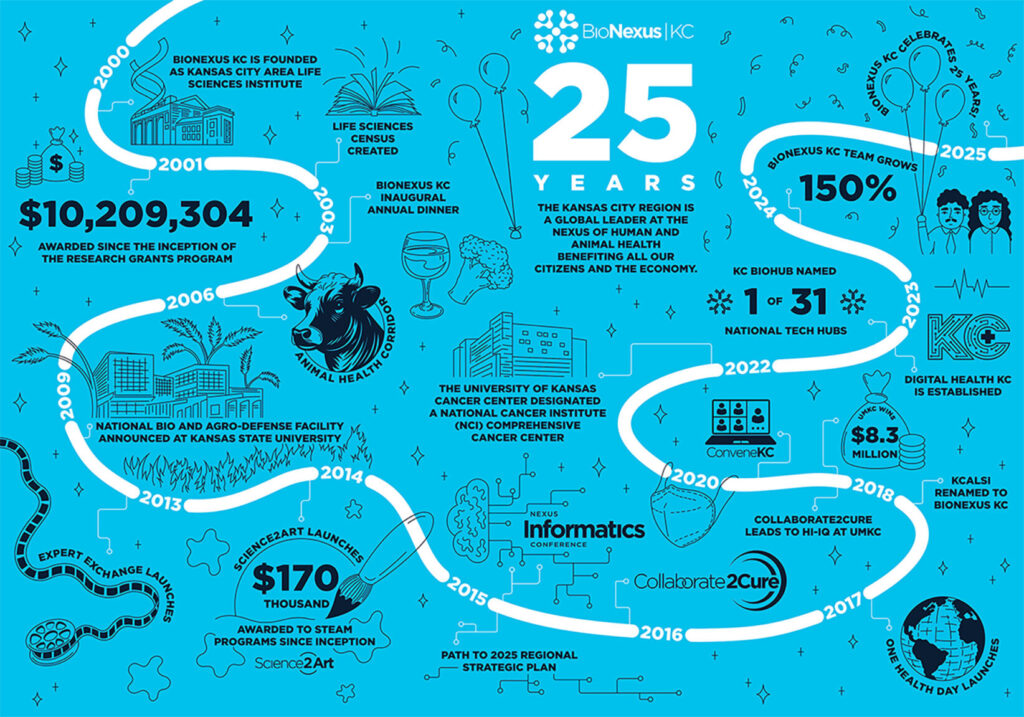
Illustration courtesy of BioNexus KC
Through strategic partnerships, data-driven initiatives, and regional convening, BioNexus KC traversed key moments of impact through its 25 years, the organization said, specifically touting such milestones as:
- 2000: BioNexus KC founded as the Kansas City Area Life Sciences Institute
- 2001: Research Grants program started and $10.2 million has been awarded since its inception
- 2003: KC Regional Life Sciences Census created to benchmark regional scientific assets
- 2006: Animal Health Corridor established, positioning KC as a global hub for animal health
- 2009: National Bio and Agro-Defense Facility (NBAF) announced at Kansas State University
- 2013: Expert Exchange launched to spotlight regional research leaders
- 2014: Science2Art launched to support STEAM education and creativity in science
- 2015: Path to 2025 Regional Strategic Plan introduced to guide strategic regional growth
- 2015: Nexus Informatics Conference launched to advance data-driven innovation
- 2016: Collaborate2Cure launched to accelerate cross-disciplinary problem-solving
- 2017: KC One Health Day launched to highlight the interconnectedness of human, animal, and environmental health
- 2018: KCALSI officially renamed BioNexus KC
- 2020: Convene KC launched to coordinate regional discussions and response efforts during COVID-19
- 2022: The University of Kansas Cancer Center designated a National Cancer Institute Comprehensive Cancer Center
- 2023: Digital Health KC established to grow the region’s digital health innovation ecosystem
- 2023: KC BioHub named one of 31 national Tech Hubs by the U.S. Economic Development Administration
- 2024: BioNexus KC team expands by 150 percent, strengthening organizational capacity
- 2025: BioNexus KC celebrates 25 years of regional life sciences impact with the region’s community leaders
“BioNexus KC has become a platform through which projects like KCBH and Digital Health KC have evolved from community-led efforts into community-wide economic development,” said Roberts Chapman. “Having this infrastructure in place has given our community an advantage because we have an ability to support many different projects that advance the life sciences in the region — from NBAF, to the NCI Designation, to the Tech Hub Designation — under a sustained strategy and in alignment across many different stakeholder institutions.”

This story is made possible by Network Kansas.
Network Kansas promotes an entrepreneurial environment by connecting entrepreneurs and small business owners with the expertise, education and economic resources they need to succeed.